
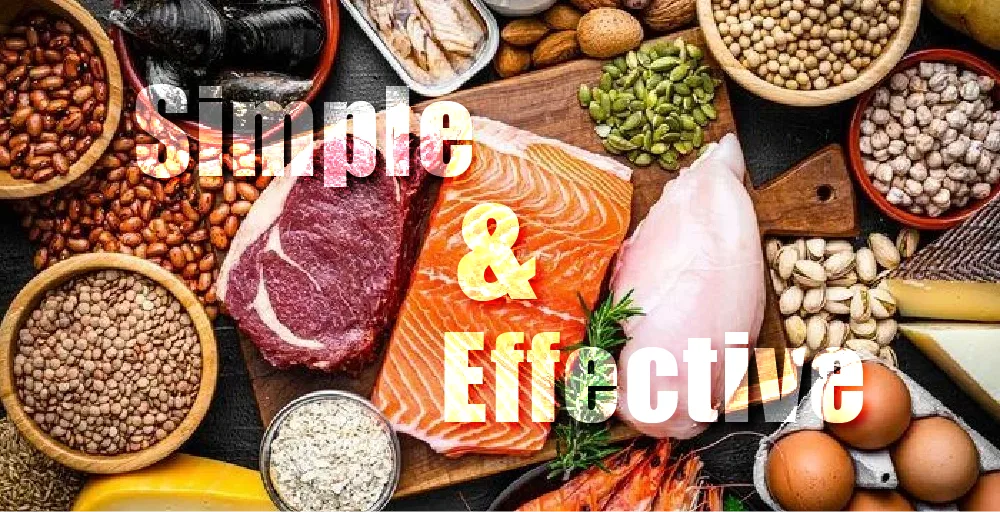
Keep It Simple Stupid,… Present Company Excepted of Course
- Hammer the proteins,
- Be generous with the good fats, and
- Keep the carbs in the “just-about-to-spill-over” zone.
To What End?
Any discussion on diet and nutrition should start with the purpose and goals for your nutrition plan. For this discussion we can use the goal of general all-around health and lean muscle mass maintenance and development. These recommendations should also be useful in producing favorable results across a broad spectrum of ends. There are certainly exceptions to this, for example you may want to take a different approach if you are building a world-class sumo wrestler physique.
For the purposes of discussion, I am going to speak/write in somewhat simplified terms here. For that reason, this will be accurate but not always precisely complete. It may help with your understanding of how your body utilizes proteins, fats, and carbohydrates, what we call macronutrients or macros for short. The purpose is teaching you how to fish (how to conceptualize and craft your own diet plan) rather than giving you a fish (giving you a specific diet plan). Also, keeping it simple will not only help you to conceptualize but also implement your behavioral modifications.
A Brief Macronutrient Summary
- Proteins like beef, fish, and chicken provide the building blocks for muscles (cell maintenance and repair)
- Fats like fish oils, olive oils, avocados, and nuts provide for the healthy functioning and hormone production.
- Carbohydrates like grains, starches, and sugars provide the fuel for energy to operate and for activities.
Yes there are a many caveats and nuances that we are overlooking for now, like:
- In addition to providing fuel for energy, carbohydrates have a protein sparing effect where if you have more carbohydrates, you don’t need as many grams of protein.
- Through a process of glycogenesis some of your proteins can be converted into glucose which if there is a surplus might get metabolized for energy or stored as bodyfat for future use. This bodyfat could then be used as energy when needed in the future.
- There will be some fat that will come with your proteins and proteins with your fats.
- If you are in a state of ketosis, your body can use ketones for energy.
- etc.
Since this is the simplest and most useful description of macros ever, we will be forgoing much of that for now.
How should you utilize this over-simplified information? Use it conceptualize how your body uses macros and how it can be fueled for its best success.
Proteins (Go Kinda Crazy)
First let’s pretend that we can eat as many grams of protein as we like with no upper limit (as long as it is at or above 0.8 grams of protein per pound of bodyweight.) Yes, eat as many grams of protein, above that minimum, as you care to in any given day. If you overdo it, that is perfectly fine. In fact, if you are starving, feeling very hungry, a bit achy, etc., have some more protein instead of carbs to offset those hunger pangs. (My fridge is always stocked with hard boiled eggs and I have tubs of protein powder at the ready. If I ever feel achy like my body is starved of protein, that is my go-to snack. Peel one or two, cut them 4-6 ways salt and pepper them and all is right with the world again.)
Fats (Be Happy)
Next, eat a lot of the healthy high-quality fats. How?, in a number of ways.
- First, do not shy away from (or I should say embrace and enjoy) the animal fats and fatty fish (like salmon) that accompany your proteins. Enjoy the fat that is in your steak, with your ground beef, and the skin of your chicken. Even enjoy some real bacon, you will get both protein and fat here for sure.
- Second, if you are having dairy, pay attention to the protein, fat, and carbohydrate contents of your dairy. The higher the protein and fat content in your dairy, the better. Some dairy, like mozzarella or sour cream have only fats and proteins with no carbs. This is awesome and what we want. You don’t need to totally exclude dairy with carbs and sugars, simply be aware of what you are consuming and minimize the tag-along carbs. (If you drink milk, pay attention to the amount of carbohydrates/sugars (lactose) you are drinking in that milk.)
- Third, ensure that you add in some good fats in foods such as high-quality (from grass fed cows) butter, high-quality extra-virgin olive oils, avocados, egg yolks, and some nuts. Enjoy that guacamole, just be selective and mindful of the type and quantity of chips you have with it. If you want mayonnaise, use avocado oil mayo (this way you will avoid the bad oils found in most of the traditionally-prepared mayos).
Similar to the protein, if you find that you are very hungry at any time, its OK to have some fats with your protein instead of carbs. (This is why the hardboiled egg snack is great because the yolks have great fat in them.)
Note: Focus on whole foods and be wary of foods that are highly processed or potentially combined with garbage. For example, I didn’t include fats combined with carbs/sugars and other garbage like seed oils, high fructose corn syrups, etc. Sugars aren’t necessarily bad. Some types of sugars aren’t good and we are managing our carb intake here. Also speaking of bad fats mixed with carbs, chips cooked with anything other than avocado oil or beef tallow are excluded. Similarly things like ice cream are excluded here because of their large load and types of carbohydrates/sugars and other unknown ingredients. On the other hand, our own protein smoothie/ice cream recipe is great though because it is crafted correctly with outstanding ingredients. We talk more about the healthy alternatives to things like ice cream in our “Mangiamo (Let’s Eat)” book.
Carbohydrates (Don’t Spill Over)
Third, enjoy high-quality carbohydrates too but here is where you eat only as many carbohydrates as you need to fuel your body for your activities. The amount of carbohydrates will vary based upon the individual and the activities you are undertaking. Let me introduce the concept of spilling over. In some parts of the world spilling over is a synonym for vomiting. That is not what I mean. What I am talking about is the point where your carbohydrate intake exceeds your body’s energy needs. At this spilling over point, your body will be converting those excess carbohydrates into stored bodyfat. It does this in case you need those energy stores for an upcoming famine or when you’re hibernating (if you are a bear or something). Instead, store your excess energy in your pantry in the form of food not around your heart, on your hips and belly in the form of bodyfat.
Glycogen-Loaded or Muscle-Bonking?
How do you know if you are spilling over? That is something that you will come to recognize as you pay attention to your body and your diet over time. How much energy do you have? Are you never really that hungry? How do your muscles feel as you train and how does your body look in the mirror? On the other side of that coin, your carb intake might be too low for your needs. Do your muscles fatigue early and feel sort of flat or sort of gritty and hot? Are you muscle-bonking? Are you hitting the glycogen-depleted wall? You will come to know how you want to feel going into a workout and how glycogen-loaded you are. Further, if you are going into a workout or halfway through a workout and feeling gassed (out of gas) early, it may be because the glycogen stores are low in your muscles. There are ways to catch up in a hurry. I use honey, smarties (pure dextrose), and some dark chocolate after my warmup when needed. I don’t know if the dark chocolate helps or hurts (but its very tasty), just know you can reload your glycogen stores in a hurry, within certain limits, when needed. We will get into more detail about identifying spilling over in another article later.
To Sum it Up
- Hammer the proteins,
- Be generous with the good fats, and
- Keep the carbs in the “just-about-to-spill-over” zone.
Get Salty and Hydrate
Also, I need to mention this because we have been sold so much nonsense over the years with respect to nutrition. I encourage you to salt the living daylights out of your food. Make sure it is good unadulterated salt and pile it on, if you like. Your body needs the salt to operate optimally, don’t skimp. Also, as the old CamelBak tagline used to say, “Hydrate or Die.”
Sympathy for the Devil
The standard warnings about salt consumption from the CDC and the like, are because they are dealing with a sedentary, unhealthy, morbidly obese, dehydrated, dumbed-down, highly-medicated population, who are constantly stuffing their ghoul holes with highly-processed packaged salty snack garbage poison and sometimes chasing it with alcohol. It’s these types of warnings that blindly try to address a symptom of a larger issue that end up compounding the real problem. If you fall into that demo, you are probably not reading this. I am addressing the Gen-X Elite. I am not a doctor and I don’t play one on TV so don’t listen to me.
Gen-X Elite | 1-on-1 Coaching | Executive Performance | Back in the Game | Strength for Life