
Calories In Minus Calories Out
If the question is, “How many calories should I consume?”, then the answer is, “It depends upon what you want to achieve.” At a basic level its as simple as calories in minus calories out. If that formula yields a positive result, then you are gaining weight. If that formula yields a negative result, you are losing weight. If that formula yields close to zero, you are maintaining weight.
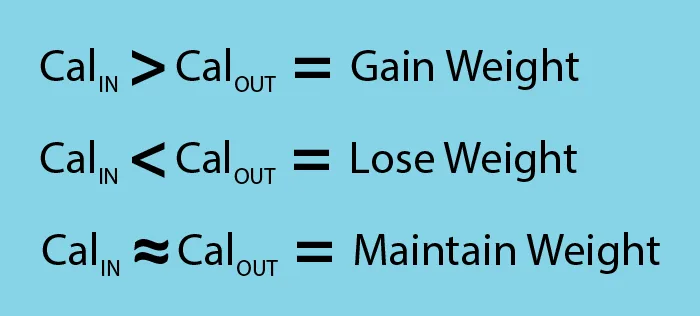
There are all sorts of variables to be considered in terms of manipulating how and what types of calories are expended. However, at a fundamental level “Calories In vs. Calories Out” is a fact from which you can’t escape. I addressed calories, how they relate to a pound of bodyweight, and how calories are consumed by your body in Calories, What to Know and How to Use Them.
What is My Equilibrium Baseline?
Your baseline equilibrium point is the number of calories you need each where calories ingested equals calories expended. Although this may be a bit of a moving based upon activity, it is probably a narrow range until you make significant changes. The best and most practical thing we can do to identify this is take a guess and then monitor and adjust from there until you arrive at a reasonable figure. Are you ready for this magic guess? Drum roll please,…. take you bodyweight and multiply it by 12. Boom! there is your magic starting point. If you care to manage and track your calories and activities precisely, you can start there then, track, measure, and adjust to meet your goals. If you aren’t that concerned about specific details or precision you can eat less and move more. Although to be more precise and acurate, we want to eat better and move better in the context of our goals.
Now What?
If you have read and followed “The Simplest and Most Useful Description of Macros Ever” you can track those calories you are consuming and see how close that guess is to reality. If you have read and followed the Weighing Yourself section of Calories, What to Know and How to Use Them then you can also see if you are adding or losing bodyweight. Adjust your calories up or down to validate or correct your baseline estimate.
Basic Calories in vs. Calories Out
Once you have dialed-in your baseline equilibrium calories from “The Simplest and Most Useful Description of Macros Ever” then the diet planning is simple. If you want to increase your bodyweight, add more calories and/or reduce your activity. If you want to reduce your bodyweight, reduce your calorie intake and/or increase your activity. That is it, Remember, we are making the complex simple.
Eat Better and Move Better
If we wish to eat better and move better in context of our goals, we have come a long way on the Eat Better part with “The Simplest and Most Useful Description of Macros Ever” diet planning coupled with the calories in vs. calories out fact. The move better portion relates to things like Zone 2 cardio for 150 minutes a week, Blood and Guts weight training, systemic vs. muscular fatigue, etc. With that said, let’s move on to more aggressive weight and/or fat reduction strategies.
More Advanced and Aggressive Weight/Fat Reduction Strategies
Keto Diet
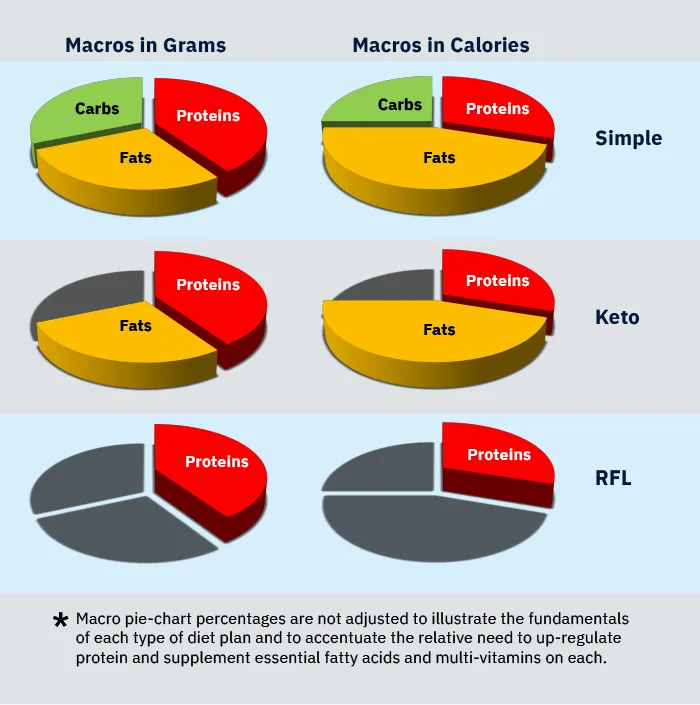
If you wish to try a more aggressive fat reduction strategy you can try putting your body into ketosis with a ketogenic diet, AKA Keto. Take what you learned in reading “The Simplest and Most Useful Description of Macros Ever” and from your equilibrium calories point, remove all carbohydrates from your diet. It is important that you have virtually no carbohydrates during this strategy. Do this for a minimum of 72 hours (3 full days) this will put you into a state of ketosis where your body will burn ketones for energy rather than carbohydrates/glycogen. (If you find that you are dropping weight too drastically, then add protein and maybe a bit of fat to your plan.) You will probably feel like crap (a bit flu-like) at that 3-4 day point as your body gets into ketosis. It will get better after that but don’t expect massive energy. I would temper my weight training intensity during this diet. I would also be mindful of how you feel during cardio and do not push yourself hard during training during the keto diet. You will still be targeting Zone 2 but if it feels a lot more difficult than it usually does, just back off a bit. If you choose to try Keto, I suggest trying it for 5-7 days your first go round.
Rapid Fat Loss (RFL)
Once you achieve a healthy 10% bodyfat for men and 20% bodyfat for women using one of foregoing diets, you might want to try RFL. I wouldn’t bother with this unless it was prep for a competition or something similarly extreme. I say this primarily from the psychological and behavioral competency aspect. Although a RFL diet can be very effective and was designed for people with at much higher bodyfat percentage levels, if you haven’t achieved a certain level of understanding and discipline then the RFL diet might be a bridge too far at that point.
More aggressive than Keto, Lyle McDonald’s RFL diet plan (as I employ it anyway) is simply Keto (no carbs at all) and no fats other than what is incidental to your protein. Do that and increase your protein to 125-150% of what you did in your “The Simplest and Most Useful Description of Macros Ever” baseline diet. Similarly to the Keto diet, II would temper my weight training intensity during this diet. I would also be mindful of how you feel during cardio and do not push yourself hard during training during the keto diet. You will still be targeting Zone 2 but if it feels a lot more difficult than it usually does, just back off a bit. If you choose to try RFL, I suggest a week your first go round.
On all three of these, I would recommend you take a genuine high-quality multi-vitamin, and high-quality essential fatty acids like what you will find in my supplement stack suggestions in order to facilitate the best results for maintaining health and muscle mass along the way.
Simple as That
There you go, it really is that simple. I didn’t say easy, but simple. The question is, “How bad do you want it?” If counting or at a minimum understanding your calories is a bridge too far then you don’t want it very bad. That is fine, just know that you get out of it what you put in. You need to put in the work to achieve the results you want. I personally wouldn’t bother going beyond the “The Simplest and Most Useful Description of Macros Ever” diet plan except with occasional exceptions.
Fasting
I will more thoroughly cover fasting in another article. Spoiler alert,… I think a 36-hour fast a handful of times a year can be fantastic. I think intermittent fasting as part of an ongoing training regiment is a dumb fad that does not likely serve your training goals well.
Gen-X Elite | 1-on-1 Coaching | Executive Performance | Back in the Game | Strength for Life